
You walked into a store to buy just one thing — maybe a bottle of shampoo or a pair of socks. Twenty minutes later, you’re at the checkout with five extra items you never planned to buy. Sound familiar? You’re not alone. This is the powerful reality of impulse purchasing, and it is driven almost entirely by the psychology of buying behaviour. Understanding why people make these unplanned decisions is one of the most valuable insights the psychology of buying behaviour offers modern marketing and one of the most profitable levers any brand can pull.
Impulse purchases account for a staggering share of global retail revenue. Brands invest billions engineering the exact conditions that trigger that split-second “yes” in a consumer’s mind — through store layouts, pricing psychology, recommendation algorithms, and carefully scored advertisements. But what exactly happens in our brains when we grab something we never planned to buy? Let’s break it down, from the neuroscience to the real-world brand playbook.
Key Takeaway for Marketers
- Impulse purchases are not accidents — they are the predictable result of aligning the right emotional trigger with the right product, in the right environment, at the right moment. Master this equation and you master the psychology of buying behaviour – and with it the science of impulse purchasing
What Exactly Is an Impulse Purchase?
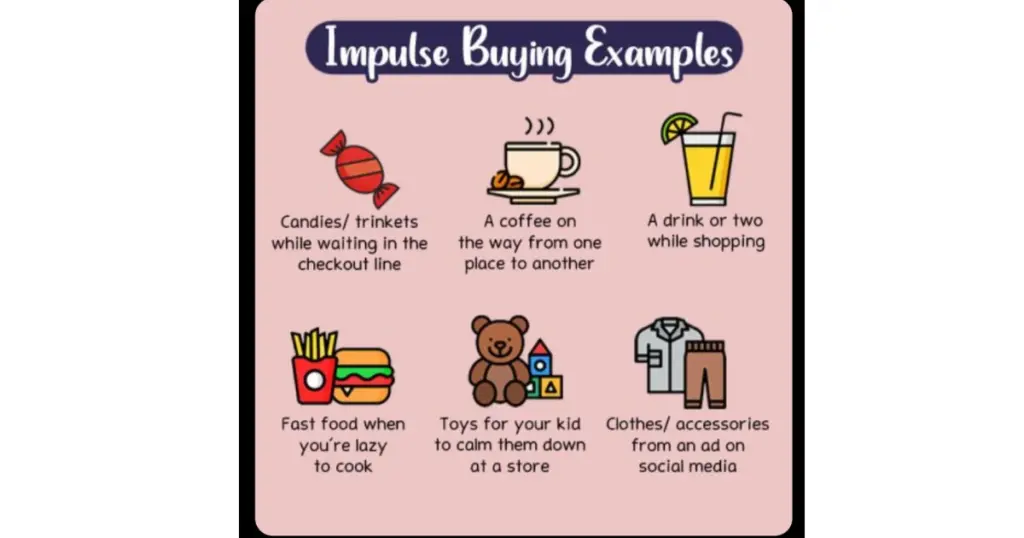
An impulse purchase is any buying decision made spontaneously — without prior planning or deliberate consideration. It happens quickly, often emotionally, and is rarely regretted at the moment it occurs. According to research published in the Journal of Consumer Research, nearly 40% to 80% of all purchases can be classified as impulse buys depending on the product category — and that range covers everything from a checkout-lane chocolate bar to an unplanned airline upgrade.
The psychology of buying behaviour tells us these decisions are never truly random. They are triggered by a precise combination of internal emotional states and external environmental cues — and brands have spent decades learning exactly how to manufacture those conditions on demand.
The Brain Science Behind Impulse Buying
To truly understand the psychology of buying behaviour behind impulse purchases, we need to look inside the brain. Neuroscience tells us that buying decisions — especially impulsive ones — are largely governed by the brain’s emotional and reward systems, not its rational centres.
The Role of Dopamine
When a consumer spots a product they desire, the brain releases dopamine — the “feel-good” neurotransmitter linked to pleasure and anticipation. Crucially, this dopamine surge happens before the purchase, during the moment of wanting. This creates an almost irresistible urge to act immediately. The brain essentially says, “Buy this now and you’ll feel great.” Retailers actively engineer experiences—flash sales, product staging, personalised recommendations—to repeatedly trigger this dopamine loop.
Emotional State and Buying Urges
Both positive and negative emotional states fuel impulse purchases. When people feel happy, they spend to celebrate. When stressed, sad, or bored, they spend to self-soothe — a behaviour widely known as retail therapy. A 2021 study from the University of Michigan found that consumers in a negative emotional state were up to 25% more likely to make unplanned purchases than those in a neutral state. The act of buying delivers a momentary sense of control and pleasure — a psychological reset button.
Consumer Behaviour Theories That Explain Impulse Buying
Several foundational consumer behaviour theories give us powerful frameworks to explain why customers act on impulse. Marketers and behavioural economists use these models to predict and capitalise on unplanned buying decisions.
1. The Stimulus-Organism-Response (S-O-R) Model
The most widely applied of all consumer behavior theories in retail psychology, the S-O-R model explains that external stimuli (store layout, music, pricing signs) act on a consumer’s internal emotional state, which then produces a behavioural response — the purchase. This is why retailers invest so heavily in crafting sensory environments: they are engineering the “O” in the equation to make the buying response inevitable.
2. Maslow’s Hierarchy of Needs
Impulse purchases frequently tap into mid-level psychological needs: belonging (buying a branded item to fit in), esteem (buying something luxurious to feel successful), or safety (stockpiling goods during uncertainty). Brands that position their products as need-fulfillers — even at a subconscious level — trigger impulse buys far more effectively than those that lead with features alone.
3. Classical Conditioning
Brands systematically associate their products with positive stimuli — joyful music, aspirational imagery, nostalgic cues — to create automatic emotional responses in consumers. Over time, simply seeing the brand’s packaging triggers a positive feeling that lowers resistance to purchase. This is classical conditioning applied to commerce, and it operates almost entirely outside of conscious awareness.
Key Triggers of Impulse Purchases
Understanding what specifically triggers impulse buying is crucial – the psychology of buying behaviour identifies several powerful, consistent triggers across retail contexts.. The psychology of buying behaviour identifies several powerful, consistent triggers across retail contexts — physical and digital.
- Scarcity & Urgency
“Only 3 left in stock!” or “Offer ends in 2 hours” creates fear of missing out (FOMO), bypassing rational thought and pushing immediate action.
- Price Anchoring
Showing a high “original” price next to a discounted one makes the deal feel irresistible, even if the consumer didn’t plan to buy the item.
- Visual Merchandising
Strategic product placement, colour psychology, and eye-level shelving dramatically increase unplanned grab rates in physical stores.
- One-Click Buying
Reducing purchase friction online — saved credit cards, one-click checkout — eliminates the rational pause that might otherwise stop a purchase.
- Social Proof
Reviews, ratings, and “bestseller” labels validate the purchase decision quickly, reducing uncertainty and accelerating the impulse buy.
- Bundling & Free Offers
“Buy 2, get 1 free” or free shipping thresholds push consumers to add more items they wouldn’t have otherwise considered buying.
How Environment Shapes the Psychology of Buying Behaviour
The environment in which a consumer shops plays an enormous role in the psychology of buying behaviour – and in triggering impulse purchases. Research by retail psychologist Paco Underhill found that consumers who physically touch a product are significantly more likely to buy it. End-of-aisle displays, checkout queues stocked with small, tempting items, and slow, pleasant background music all increase impulse buying rates — music alone has been shown to lift average spend by up to 38% by keeping shoppers in-store longer.
People don’t know what they want until you show it to them — and they certainly don’t know how much they want it until you create the right conditions.
— Philip Kotler, Marketing Management
Online, the same principles apply at even greater speed. Personalised recommendations, countdown timers, abandoned cart emails, and one-click checkout are all engineered to remove the rational pause between desire and transaction. Social commerce on TikTok and Instagram compresses this even further — a consumer can discover a product, feel an emotional connection, and complete a purchase in under 30 seconds.
The Role of Identity and
Self-Expression in Impulse Buying
One of the most powerful — and underappreciated — drivers in the psychology of buying behaviour is identity. Consumers often make impulse purchases not because they need an item, but because it reflects or reinforces their self-image. When a product feels like “them,” buying it feels less like an impulse and more like self-expression. Research from Harvard Business School shows that consumers will pay a premium for products that strengthen a desired identity — and will often do so on the spot, skipping comparison shopping entirely when the emotional resonance is strong enough.
This is why luxury brands never compete on price, and fast-fashion brands release new collections twice a week. Both strategies keep the identity hook permanently baited — making purchases feel not impulsive, but inevitable.
Real-World Brand Examples of Impulse Buying Psychology in
Action
Theory becomes truly powerful when you see the psychology of buying behaviour at work in the strategies of the world’s most successful brands. The following examples show how global companies apply the psychology of buying behaviour — and the consumer behavior theories behind it — to engineer impulse purchases at scale.

1. Amazon — The One-Click Empire
Amazon’s platform is a masterclass in impulse buying design. Its patented one-click ordering system removed the single biggest barrier to impulse purchases: the friction of entering payment details. Today, Amazon extends this philosophy through Lightning Deals with countdown timers, “Frequently Bought Together” bundles, and a personalised homepage powered by machine learning. The result is striking — Amazon reports that up to 35% of its total revenue comes directly from its recommendation engine, the digital equivalent of a perfectly stocked impulse aisle.
2. IKEA — The Maze That Sells
IKEA’s one-way, winding store layout is the most studied example of physical retail impulse engineering in history. Every customer must pass through every department regardless of what they came to buy — maximising product exposure at every step. Beautifully staged room displays trigger the S-O-R model perfectly: the stimulus (a lifestyle scene) creates emotional desire (organism response) and produces an unplanned purchase (behaviour). The result? Studies show the average IKEA shopper enters planning to buy one or two items and leaves with six to eight.
3. Starbucks — Scarcity and the Seasonal Drop
Starbucks turned seasonal product launches into one of the most reliable impulse purchase mechanisms in food and beverage retail. The annual return of the Pumpkin Spice Latte — available only in autumn — is a textbook combination of classical conditioning (warmth and nostalgia) and genuine scarcity (it will disappear). The social media anticipation that builds before each launch amplifies desire far beyond what advertising alone could achieve. Seasonal items consistently drive double-digit spikes in foot traffic during their launch windows, all fuelled by the fear that the product will be gone.
What Marketers Can Learn From the Psychology of Buying Behaviour
For marketers, understanding the psychology of buying behaviour and the consumer behavior theories that underpin it is foundational — not optional. Here is what the science consistently shows works:
Lead with emotion, not features.
Consumers buy on feeling and justify with logic afterward. Marketing that opens with an aspirational emotion — joy, confidence, belonging — outperforms feature-led messaging every time. How buying your product makes someone feel matters more than what the product does.
Reduce friction at the point of purchase.
Every extra step between desire and transaction is an opportunity for rational thinking to intervene. One-click checkout, saved payment details, and streamlined mobile experiences all protect the emotional buying decision from being overruled by the rational mind.
Use scarcity and social proof — but honestly.
Genuine limited stock and verified reviews are among the most effective impulse triggers available. Manufactured urgency and fake reviews erode trust rapidly and are both less effective and less sustainable than the real thing.
Design for discovery.
Curated product recommendations, editorial displays, and cross-category suggestions increase the probability that shoppers will encounter something they desire but didn’t know they wanted. Discovery is the precondition for every impulse purchase.
Can Consumers Resist Impulse Buying?
Understanding the psychology of buying behaviour doesn’t just benefit brands — it empowers consumers to make more intentional decisions. Once you recognise that your desire to buy is being triggered by a scarcity signal, a dopamine hit, or a store layout designed to slow you down, you reclaim agency. Psychologists call this metacognitive awareness — thinking about your own thinking — and it is one of the most effective defences against impulsive spending.
Practical steps include the 24-hour rule (waiting a day before completing any unplanned purchase), shopping with a written list, and disabling one-click buying or removing saved payment details from browsers. Each step reintroduces just enough friction to give the rational mind a chance to weigh in. That said, not every impulse purchase is a mistake — small, joyful unplanned buys are a normal part of life. The goal is awareness, not abstinence.
Conclusion
Impulse purchasing is one of the most revealing windows into the psychology of buying behaviour. It shows us that humans are, first and foremost, emotional beings who reach for logic only as an afterthought. From the dopamine hit of anticipation to the identity-affirming power of a new purchase, our brains are wired to want — and to act on that wanting fast.
The consumer behavior theories behind impulse buying — the S-O-R model, classical conditioning, Maslow’s hierarchy — give marketers a strategic playbook and consumers a map of their own vulnerabilities. Whether you’re designing a campaign or simply navigating a supermarket, understanding these forces changes how you see every buying decision. The next time you reach for something you didn’t plan to buy, you’ll know exactly what just happened — and why.
Frequently Asked Questions
Q: What is the psychology of buying behaviour?
The psychology of buying behaviour refers to the study of how psychological factors — emotions, perception, motivation, and cognitive biases — influence a consumer’s decision to purchase. It explores why people buy what they buy and how marketing and environment shape those choices.
Q: What causes impulse purchases?
Impulse purchases are caused by emotional states (excitement, stress, boredom), environmental triggers (store design, scarcity cues, pricing signals), and neurological responses like dopamine release. They bypass rational planning and are driven by the desire for immediate gratification.
Q: Which consumer behaviour theories best explain impulse buying?
The Stimulus-Organism-Response (S-O-R) model, Maslow’s Hierarchy of Needs, and Classical Conditioning are the most directly applicable consumer behaviour theories. Together they explain how external cues trigger emotional states that override planned intentions and produce unplanned purchases.
Q: How do online stores trigger impulse purchases?
E-commerce platforms use personalised recommendations, countdown timers, one-click checkout, scarcity notifications, and social proof to reduce friction and trigger emotional buying responses. Social commerce on TikTok and Instagram compresses the path from discovery to purchase to under 30 seconds.
Q: What percentage of purchases are impulse buys?
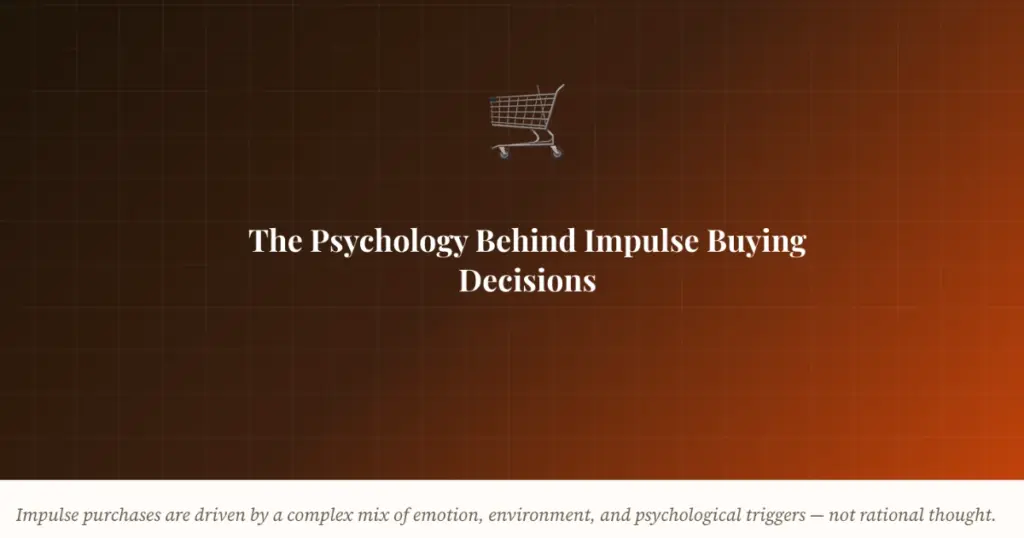
Research estimates that between 40% and 80% of purchases are impulse buys, depending on the product category and retail channel. In fashion and accessories, the figure can exceed 70%. A 2023 study by CreditCards.com found 84% of shoppers had made impulse purchases, spending an average of $314 per month.